1. The Problem of Vibe Coding
Over the past year, vibe coding has become one of the most viral ideas in the tech industry. Andrej Karpathy described it as a way of programming.
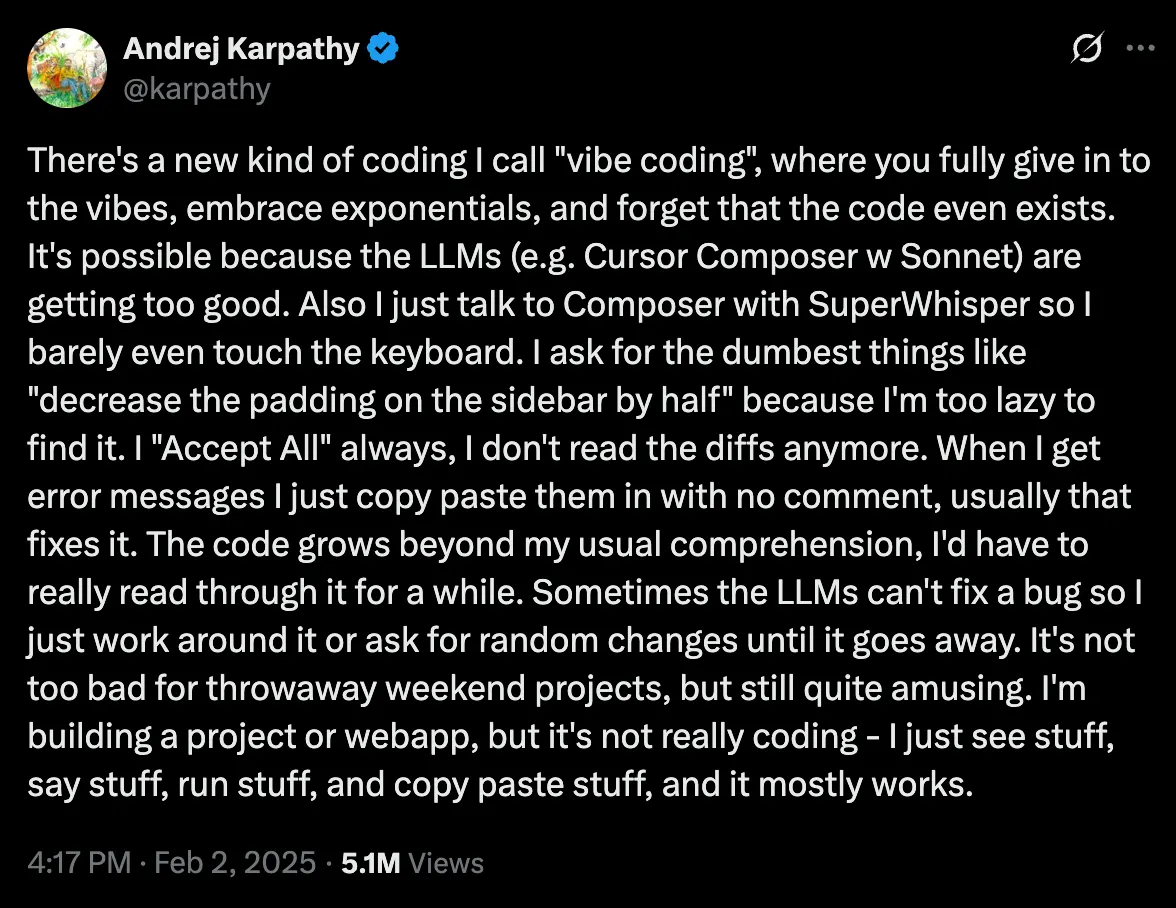
In a short explanation, you simply describe what you want, and the AI tool generates the implementation for you. For example, you ask an AI coding assistant to create a login page and integrate Google authentication. In a few minutes, it may produce something that may look good. It skips all the middle steps and jumps directly from your raw idea to the final code.
However, this approach is more like gambling, and you never know what it will produce. Most of the time, your interaction with the AI coding tool may look like this:
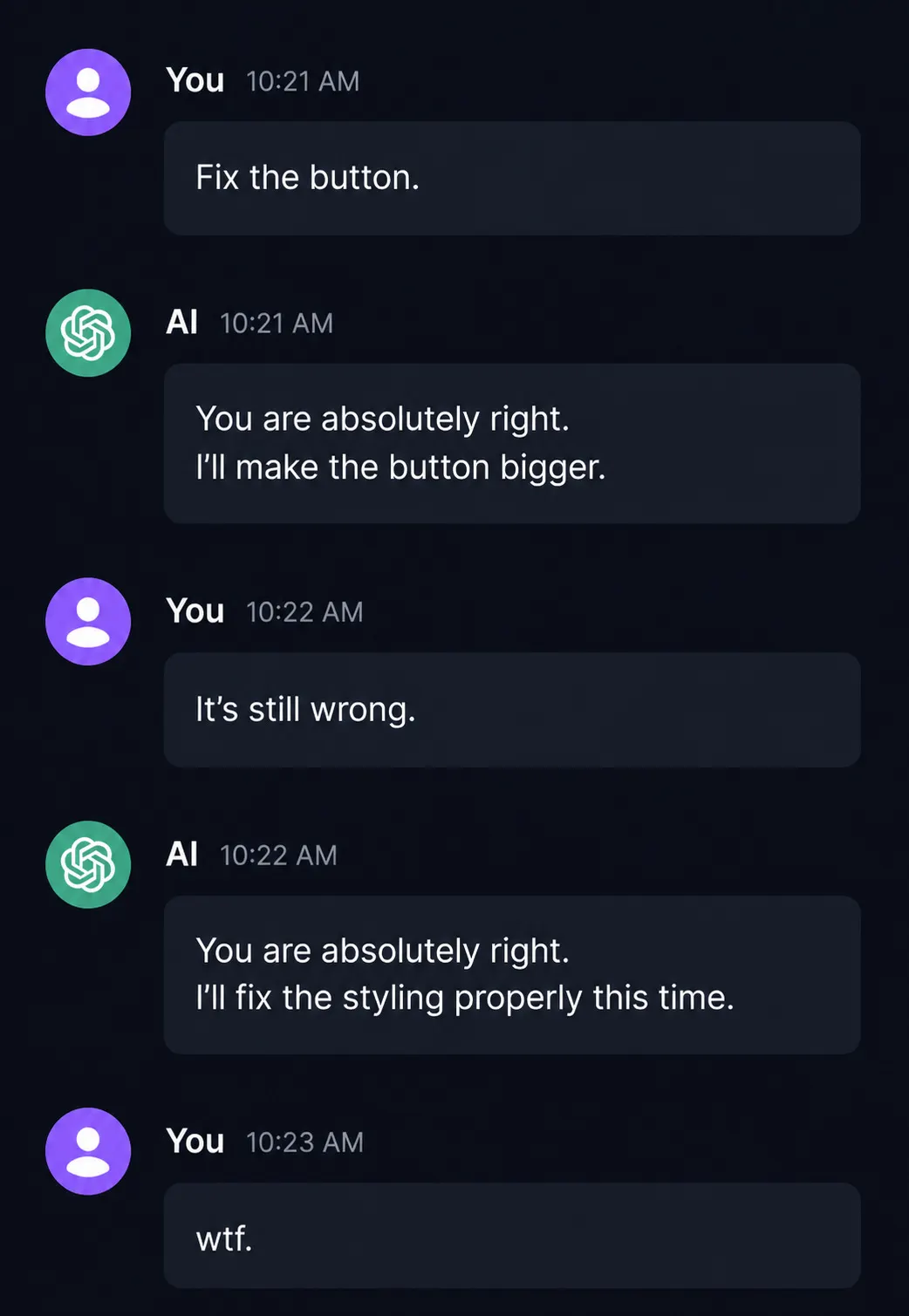
The problem is not simply that AI writes bad code. The deeper problem is that the intent was never clearly defined.
2. What Traditional Coding Looks Like
By comparison, traditional software development is slower, but it has an important advantage: it forces structure.
Before implementation, developers usually spend time understanding the product requirements.
- They ask product managers for clarification.
- They think through edge cases and failure scenarios.
- They design the technical implementation.
- They break the work into smaller tasks.
- They write tests and validate that the feature works.
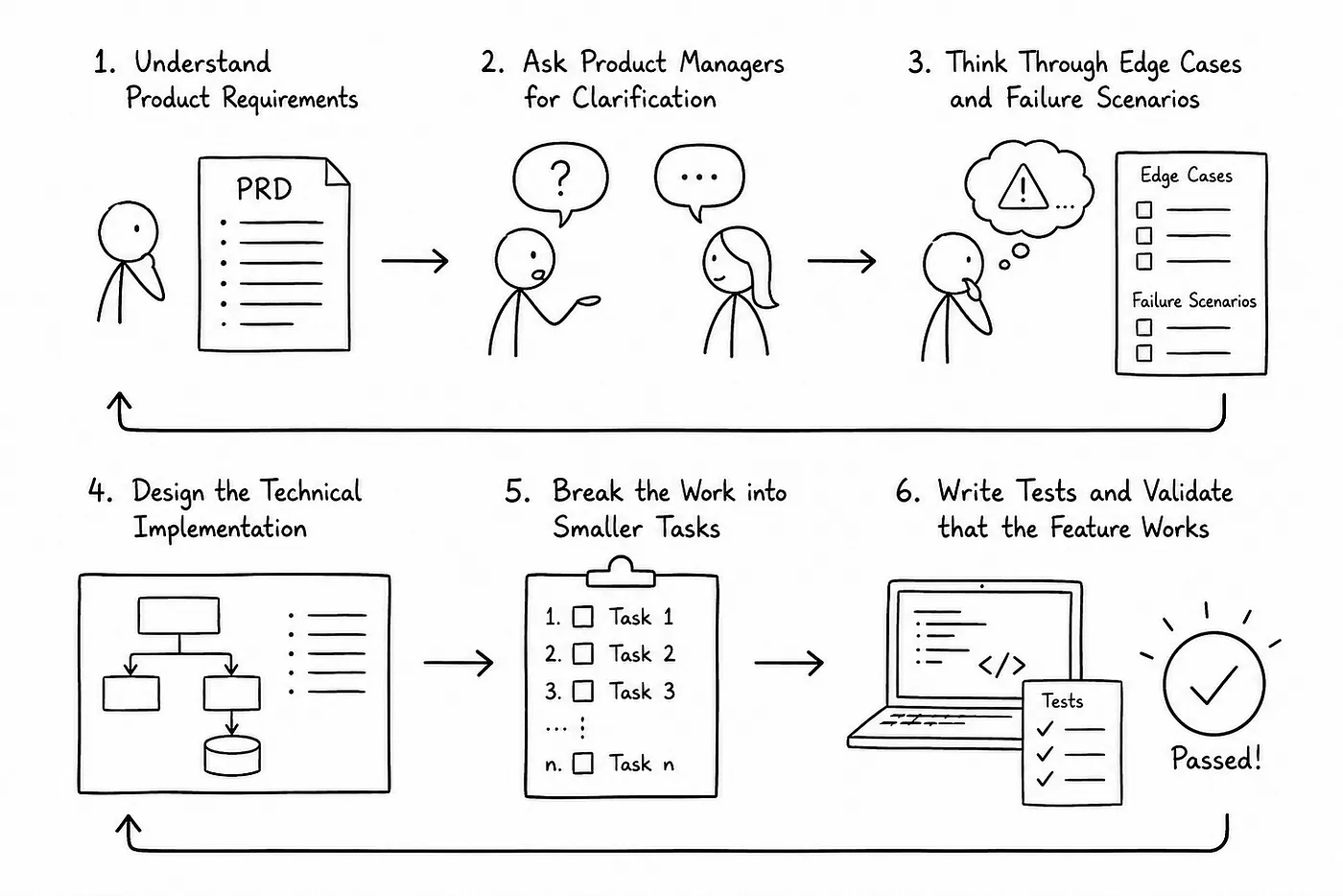
This process has 3 big advantages: reliability, predictability, and shared understanding.
- Reliability: The team is more likely to handle real-world cases before shipping. Developers usually think about edge cases, failure scenarios, testing, security, and maintainability, instead of shipping a demo MVP.
- Predictability: The development process is easier to control. The work is divided into smaller steps, each step has a clear purpose, and the code is reviewed within the team. Instead of receiving one big AI-generated change and hoping it works, the team can understand what may happen next and why.
- Shared understanding: Product managers, engineers, and future maintainers have the same mental model of the features.
3. Spec-Driven Development: Bring Traditional Coding Workflow into AI Coding
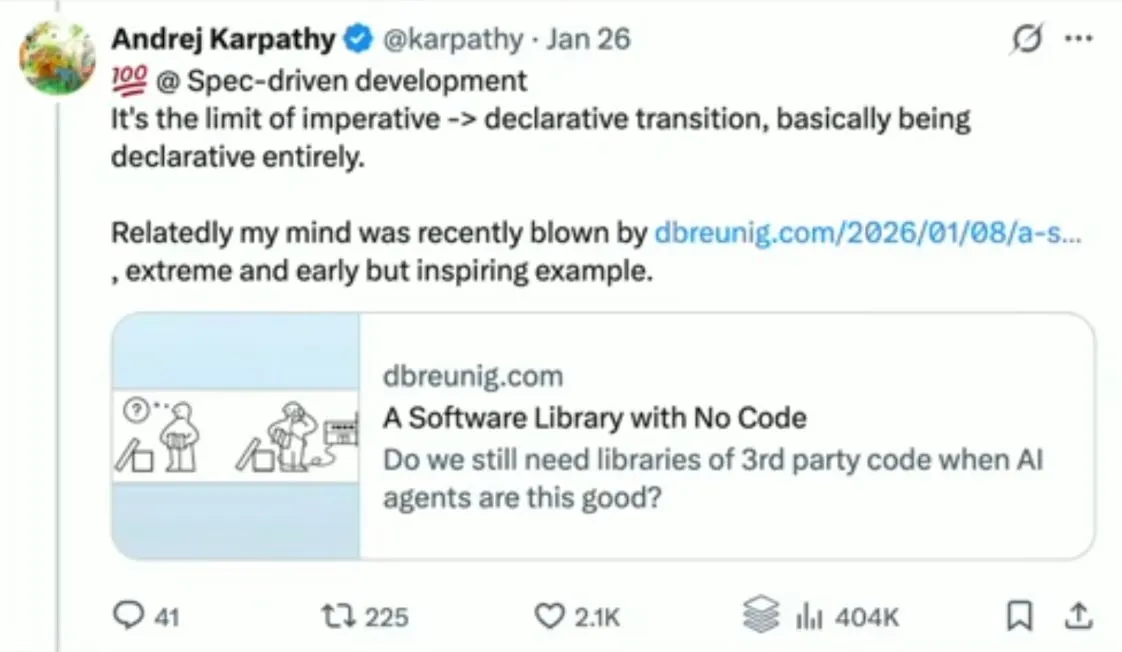
This traditional coding workflow is exactly what pure vibe coding lacks. Spec-driven development fills the gap of vibe coding.
Instead of asking the AI to write code immediately, we first ask it to help define the feature clearly. The spec describes what should be built, what is in scope, and what the failure cases are.
A simple SDD workflow looks like this:
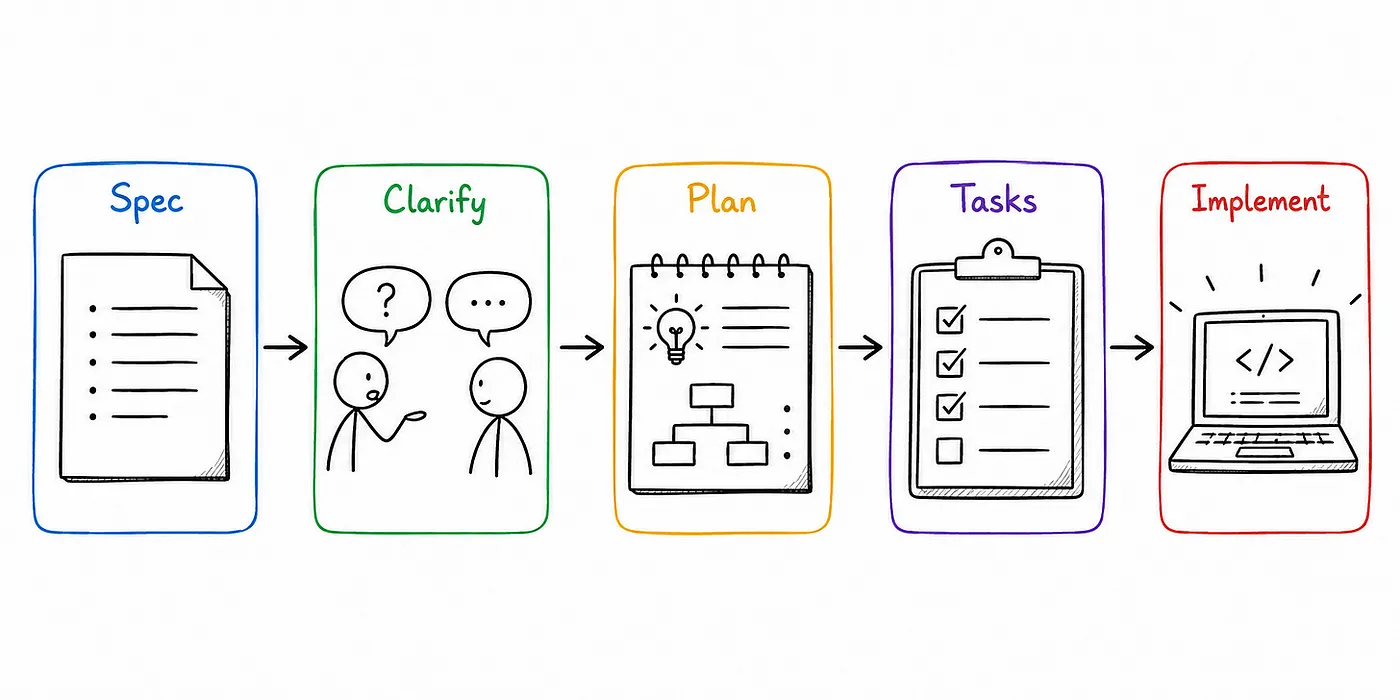
This does not mean writing a huge document for every small change. A good spec can be short. The important point is the clarity of the intent.
A useful spec should answer questions such as:
- What user problem are we solving?
- What behaviors are expected?
- What are the acceptance criteria?
- What edge cases should be handled?
- What constraints must the implementation follow?
- What is explicitly out of scope?
Once these answers are written down, the AI has a much better target. It no longer needs to invent as much missing context. Humans also have something concrete to review before implementation begins.
This is why SDD is so powerful. It gives both humans and AI agents a shared source of truth.
4. The SDD Lifecycle
Let’s take GitHub SpecKit as an example to explain the Spec-driven life cycle.
Its workflow follows the same philosophy:
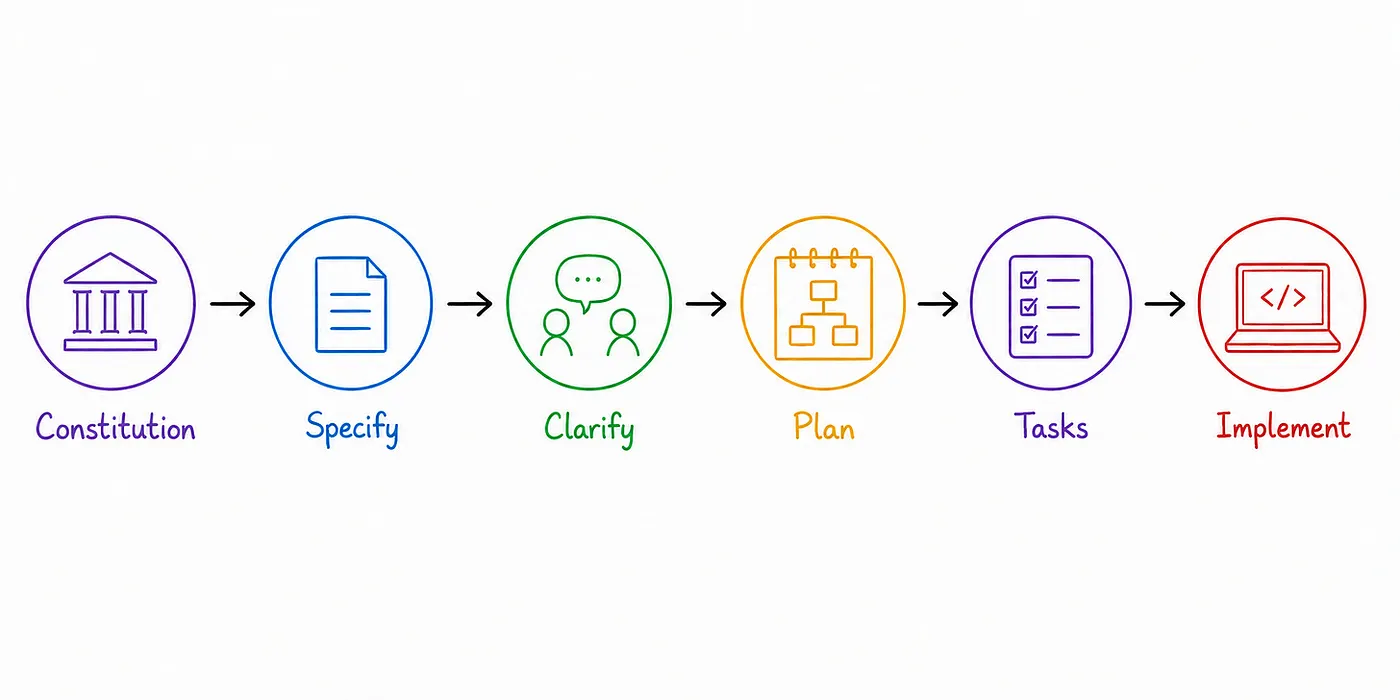
- Constitution: Defines the project rules the AI must follow, such as tech stack, testing standards, code quality, and development principles.
- Specify: Turns the feature idea into a
spec.mdfile. It describes what to build, why it matters, and the expected behavior. - Clarify: The AI asks questions about unclear requirements, then updates the spec with the confirmed answers.
- Plan: Converts the spec into a technical plan, including the implementation approach, project structure, and key technical decisions.
- Tasks: Breaks the plan into a checklist of small, executable tasks.
- Implement: The AI starts coding by following the task list, while using the spec and plan as guidance.
5. Benefits of Spec-Driven Development
SDD gives AI a clearer direction and makes it more controllable. Here are three main benefits of it.
- Clarity: Instead of relying on a one-shot prompt and praying it gives you what you want, SDD provides clearer requirements to the AI. It also makes it easier for developers to predict what the AI will do.
- Easier code review: Since the AI breaks the work into smaller tasks and can create a clear Git commit after finishing each task, developers can review the code step by step. This is much easier than reviewing one giant code block.
- Project consistency: The constitution and technical plan can define project rules, such as testing standards, tech stacks, and architecture principles. This helps reduce tech debt from AI-generated code.
6. Downsides of Spec-Driven Development
Although it has the benefits we mentioned, there are also some non-negligible downsides of SDD.
- Token cost: Since SDD injects more context into the AI agent, the token cost can increase significantly. Especially if you are using Claude Code with a usage limit, you may run out of your limit much faster.
- Speed: With a larger context, the requirement needs to be specified, the plan needs to be edited, and the work needs to be broken into many subtasks. The time cost can be much higher than simple vibe coding.
- False confidence: Even if you clearly specify what you need, the AI agent may not always do exactly what you want, but still pretend it has completed all the work perfectly.
- Over-complexity: If you just want to change a little thing, SDD can make the work unnecessarily complicated. It may also introduce extra code or useless abstractions into your codebase.
In short, SDD adds structure, but structure has a cost. The key is choosing the right amount of structure for the problem.
7. When to Use and When Not
So, when should we use spec-driven development?
The best use case is when you start building a completely new feature. Use SDD when the cost of misunderstanding is higher than the cost of writing the spec.
On the other hand, when you only need to fix a small bug or write a simple script, SDD may not be a good option.
SDD should not be the only solution for AI coding. It is just a tool that helps us control complexity.
8. Conclusion
The final takeaway is simple:
Spec-Driven Development is vibe coding with guardrails.
It helps us leverage the speed of AI coding while keeping it in control. In 2026, the advantage is not only in who can ship faster. The advantage is who can build the right system more clearly.